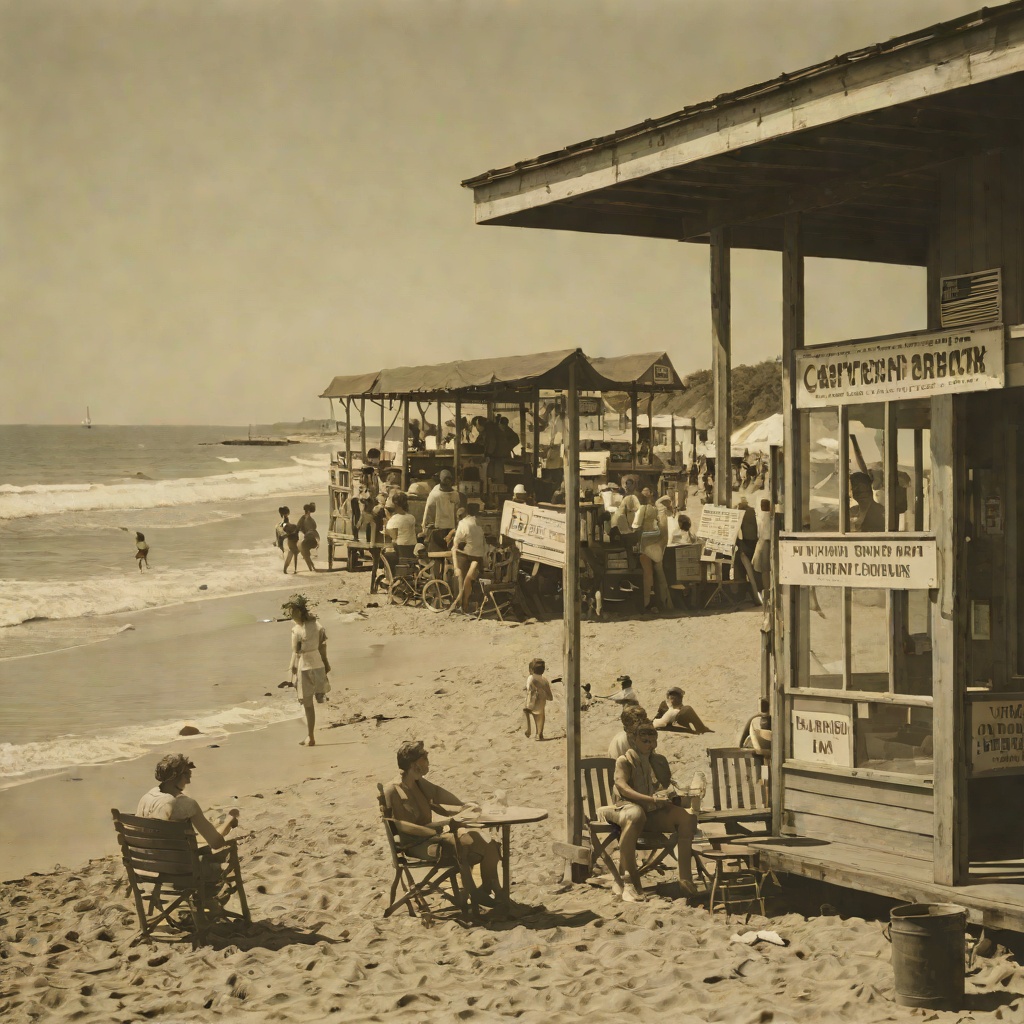
Crescent Beach
The Captain and Ann BarbaraCrescent Beach, a name printed in very small type on the maps of the environs of Boston, is a life-size strip of sand curving from Winthrop to Lynn, and historic ground in the annals of the Antin family. Now a popular resort for holiday crowds, famous under the name of Revere Beach, the place was, when the reunited Antins made their stand there, a pristine expanse of nature. There were no boulevards, no stately bath-houses, no hotels, no gaudy amusement places, no illuminations, no showmen, no tawdry rabble. There was only the bright clean sweep of sand, the summer sea, and the summer sky. At high tide the whole Atlantic rushed in, tossing the seaweeds in his mane; at low tide he rushed out, growling and gnashing his granite teeth. Between tides a baby might play on the beach, digging with pebbles and shells, till it lay asleep on the sand. The whole sun shone by day, troops of stars by night, and the great moon in its season. Into this grand cycle of the seaside day Mary Antin came to live and learn and play, having spent her life inland, believing that the great waters of the world were spread out before her in the Dvina River.
The Family's Arrival and the Refreshment Booth
By the time the family joined the father, he had surveyed many avenues of approach toward the coveted citadel of fortune. One of these, heretofore untried, he now proposed to essay, armed with new courage, and cheered on by the presence of his family. In partnership with an energetic little man who had an English chapter in his history, he prepared to set up a refreshment booth on Crescent Beach. While he was completing arrangements at the beach, the family remained in town, where they enjoyed the educational advantages of a thickly populated neighborhood, namely Wall Street, in the West End of Boston. As a family they were so diligent under instruction, so adaptable, and so clever in hiding their deficiencies, that when they made the journey to Crescent Beach, in the wake of their small wagon-load of household goods, the father had very little occasion to admonish them on the way, and he was not ashamed of them. So much they had achieved toward their Americanization during the two weeks since their landing.
The Idle Summer by the Sea
For Mary, the summer at Crescent Beach was a growing time, and she grew all the faster because she had been so cramped before. Her idea of the human world had grown enormously during the long journey; her idea of the earth had expanded with every day at sea; her idea of the world outside the earth now budded and swelled during her prolonged experience of the wide and unobstructed heavens. She lay stretched out in the sun, her eyes level with the sea, till she seemed to be absorbed bodily by the very materials of the world around her; till she could not feel her hand as separate from the warm sand in which it was buried. Or she crouched on the beach at full moon, wondering, wondering, between the two splendors of the sky and the sea. Or she ran out to meet the incoming storm, her face full in the wind, her being a-tingle with an awesome delight to the tips of her fog-matted locks flying behind; and stood clinging to some stake or upturned boat, shaken by the roar and rumble of the waves. So clinging, she pretended that she was in danger, and was deliciously frightened; she held on with both hands, and shook her head, exulting in the tumult around her, equally ready to laugh or sob. Or else she sat, on the stillest days, with her back to the sea, not looking at all, but just listening to the rustle of the waves on the sand; not thinking at all, but just breathing with the sea. Thus courting the influence of sea and sky and variable weather, she was bound to have dreams, hints, imaginings. The world as she knew it was not large enough to contain all that she saw and felt; the thoughts that flashed through her mind, not half understood, unrelated to her utterable thoughts, concerned something for which she had as yet no name.
The Partner Mr. Wilner and His Potato Chips
If Mary admired the soda fountain and the sausage chains, she almost worshipped the partner, Mr. Wilner. She was content to stand for an hour at a time watching him make potato chips. In his cook's cap and apron, with a ladle in his hand and a smile on his face, he moved about with the greatest agility, whisking his raw materials out of nowhere, dipping into his bubbling kettle with a flourish, and bringing forth the finished product with a caper. Such potato chips were not to be had anywhere else on Crescent Beach. Thin as tissue paper, crisp as dry snow, and salt as the sea—such thirst-producing, lemonade-selling, nickel-bringing potato chips only Mr. Wilner could make. On holidays, when dozens of family parties came out by every train from town, he could hardly keep up with the demand for his potato chips. And with a waiting crowd around him the partner was at his best. He was as voluble as he was skilful, and as witty as he was voluble; at least so Mary guessed from the laughter that frequently drowned his voice. She could not understand his jokes, but if she could get near enough to watch his lips and his smile and his merry eyes, she was happy. That any one could talk so fast, and in English, was marvel enough, but that this prodigy should belong to their establishment was a fact to thrill her. She had never seen anything like Mr. Wilner, except a wedding jester; but then he spoke common Yiddish. So proud was she of the talent and good taste displayed at their stand that if her father beckoned to her in the crowd and sent her on an errand, she hoped the people noticed that she, too, was connected with the establishment.
The Dissolution of the Partnership
And all this splendor and glory and distinction came to a sudden end. There was some trouble about a license—some fee or fine—there was a storm in the night that damaged the soda fountain and other fixtures—there was talk and consultation between the houses of Antin and Wilner—and the promising partnership was dissolved. No more would the merry partner gather the crowd on the beach; no more would the twelve young Wilners gambol like mermen and mermaids in the surf. And the less numerous tribe of Antin must also say farewell to the jolly seaside life; for men in such humble business as the father's carry their families, along with their other earthly goods, wherever they go, after the manner of the gypsies. They had driven a feeble stake into the sand. The jealous Atlantic, in conspiracy with the Sunday law, had torn it out. They must seek their luck elsewhere. In Polotzk they had supposed that America was practically synonymous with Boston. When they landed in Boston, the horizon was pushed back, and they annexed Crescent Beach. And now, espying other lands of promise, they took possession of the province of Chelsea, in the name of their necessity.
The Beach as a Site of Transformation
The experience at Crescent Beach marked a significant transformation in Mary's life, a second transformation as truly as her coming to America was the first great transformation. Looking back with a feeling of remorse and shame akin to the lover's, she confessed how late in her life nature took the first place in her affections. The idle summer by the sea was the growing time, and she grew all the faster because she had been so cramped before. Her mind, too, had so recently been worked upon by the impressive experience of a change of country that she was more than commonly alive to impressions, which are the seeds of ideas. The beach was where she first courted the influence of sea and sky and variable weather, where she was bound to have dreams, hints, imaginings. This early intimacy with nature at Crescent Beach foreshadowed her later awakening to natural history, when the drama of the spider's daily life became very real to her during Mr. Emerson's lecture, and when the Natural History Club spent the day at Nahant, studying marine life in the tide pools, scrambling up and down the cliffs with no thought for decorum, bent only on securing the starfish, limpets, sea-urchins, and other trophies of the chase. The tide had rushed in at its proper time, stealing away their seaweed cushions, drowning their transparent pools, spouting in the crevices, booming and hissing, and tossing high the snowy foam. The seeds planted in the sand of Crescent Beach bore fruit in these later adventures, as the natural world became a source of spiritual and intellectual renewal for the young immigrant.